
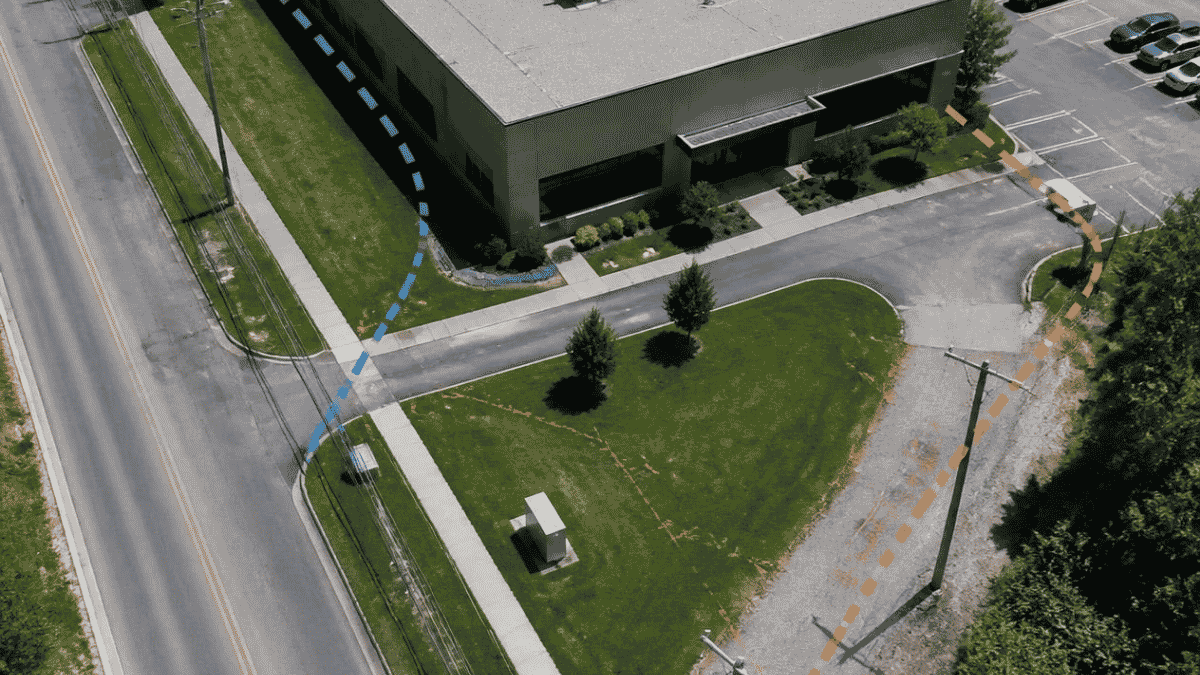
Buying backup connectivity seems straightforward.
Choose a second provider, install another circuit, and configure failover.
But provider diversity and network diversity are not always the same thing.
Two circuits may come from different companies and still share the same:
- Last-mile carrier
- Conduit
- Building entrance
- Utility pole
- Local central office
- Physical route
That distinction matters because a shared failure point can take both services offline.
Start with the Last Mile
The last mile is the final portion of the network that connects the carrier’s broader infrastructure to the customer’s location.
In many markets, especially remote ones, multiple providers may resell or use the same incumbent carrier for this portion of the service.
The organization may receive two separate bills but still depend on one physical network.
Before purchasing backup service, the organization should verify who owns and operates the final connection.
Ask About Physical Path Diversity
A separate last-mile carrier is an important step, but it may not be enough.
Two circuits can still:
- Enter through the same conduit
- Follow the same road
- Attach to the same poles
- Enter through the same building demarcation point
For locations where downtime carries significant operational impact, physical route diversity should also be reviewed.
Understand Construction Requirements
Remote facilities frequently face construction costs.
A provider may technically offer service, but only after extending fiber to the property.
Before comparing options, clarify:
- Whether construction is required
- Who pays for it
- Whether costs are waived with a term commitment
- How construction affects the installation timeline
- Whether the proposed route creates meaningful diversity
A less expensive monthly circuit may not be the better choice if it carries substantial construction charges or follows the same underlying route.
Use Aggregators for Broader Market Visibility
Internal teams often search the carriers they already know.
That may leave viable regional, wholesale, or alternative carrier options undiscovered.
Connectivity aggregators can help by:
- Reviewing multiple carriers at once
- Identifying the actual last-mile provider
- Comparing construction requirements
- Finding regional alternatives
- Coordinating quotes and installation options
The value is not simply receiving more quotes.
It is gaining better visibility into how each option is delivered.
Build the Decision Around Operational Risk
The right backup design depends on the importance of the location.
Leadership should consider:
- How long can the site operate without connectivity?
- Which systems depend on the circuit?
- Is wireless backup sufficient?
- Is fiber-to-fiber diversity required?
- What is the financial impact of an outage?
- Does the location support production, safety, payments, communications, or remote access?
Not every site needs the same level of redundancy.
But the decision should be based on operational impact rather than provider labels alone.
Final Thought
True redundancy requires more than two contracts.
It requires understanding the carriers, routes, construction, and shared infrastructure behind both services.
That visibility is what turns a second connection into a real backup.