
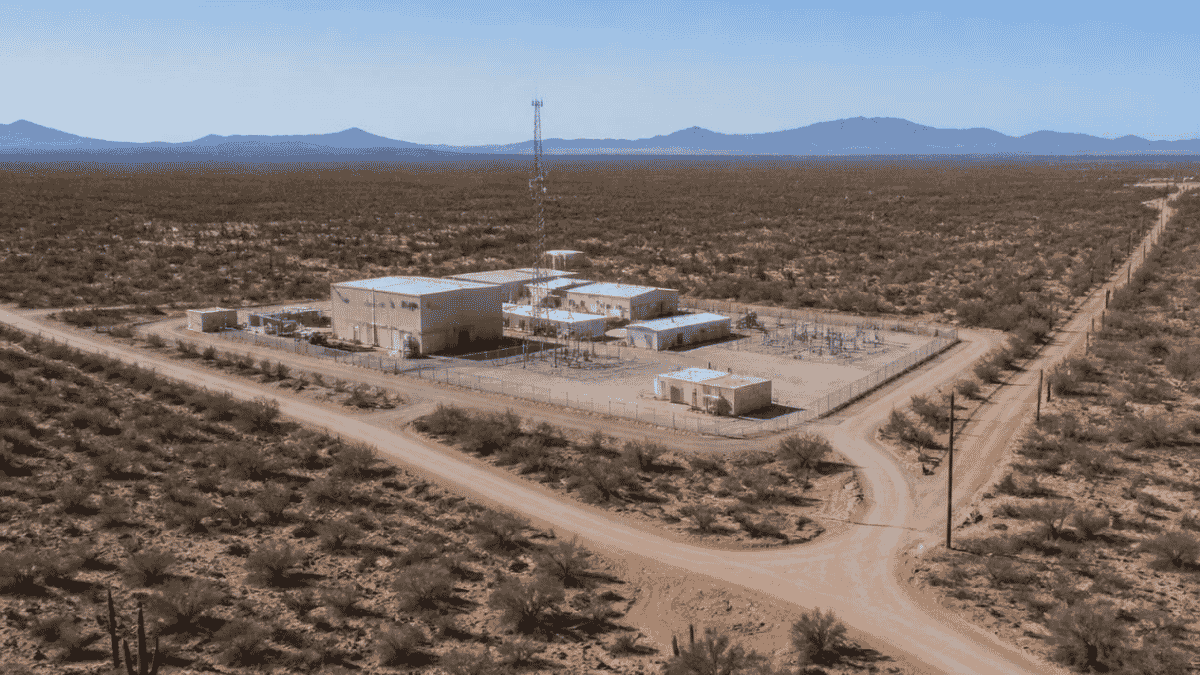
A large multi-location manufacturer recently needed backup connectivity for a remote facility in southern Arizona near the Mexican border.
The organization already had fiber service through Lumen and had tried to find a second fiber provider on its own.
On paper, several alternatives appeared available.
But each time the details were reviewed, the same issue surfaced:
Lumen was still providing the last mile.
That meant the organization could have purchased a second circuit from a different provider and still remained dependent on the same underlying infrastructure.
Why the Provider Name Can Be Misleading
Businesses often assume that buying services from two different providers creates redundancy.
Sometimes it does.
But many carriers rely on another provider to deliver the final connection into a building. This is commonly referred to as the last mile.
That creates a potential problem:
- The primary circuit may be billed by one provider
- The backup circuit may be billed by another
- Both may still rely on the same local carrier or physical route
If that shared infrastructure fails, both circuits may be affected.
The business has paid for two services without fully removing the original point of failure.
Why Remote Locations Are More Difficult
Carrier diversity is often harder to achieve in remote or underserved areas.
There may be:
- Fewer local fiber providers
- Limited construction near the property
- Greater reliance on incumbent carriers
- Higher construction costs
- Longer installation timelines
This can make it difficult for an internal team to determine which options are truly independent.
Online availability tools and carrier quotes may show service as available without clearly explaining who owns the final connection.
How the Organization Found a True Alternative
We brought in one of our connectivity aggregator partners to evaluate options beyond the carriers the organization had already approached directly.
The objective was not simply to find another fiber quote.
It was to find:
- A separate last-mile provider
- A genuinely diverse backup connection
- A solution that did not depend on Lumen
- An option without customer-funded construction costs
The aggregator identified a fiber option that met those requirements.
The organization now had access to a backup choice that was genuinely separate from its existing provider, without taking on additional construction expense.
The Real Business Benefits
The value of this process was broader than finding another carrier.
It helped the organization:
- Remove a hidden shared dependency
- Avoid paying for false redundancy
- Reduce the risk of simultaneous circuit failure
- Avoid construction costs
- Make the decision with better visibility into the underlying network
Questions to Ask Before Buying Backup Fiber
Before signing for a second circuit, organizations should ask:
- Who provides the last mile?
- Does the second circuit use the same local carrier?
- Does it enter the property through a separate route?
- Are there shared facilities or common points of failure?
- Are construction costs included?
- What happens if the incumbent carrier experiences an outage?
Final Thought
A second circuit is only valuable as a backup if it removes the dependency that could take the primary circuit offline.
The provider name on the invoice is not enough.
Organizations need visibility into who is actually delivering the service and how the connection reaches the location.