
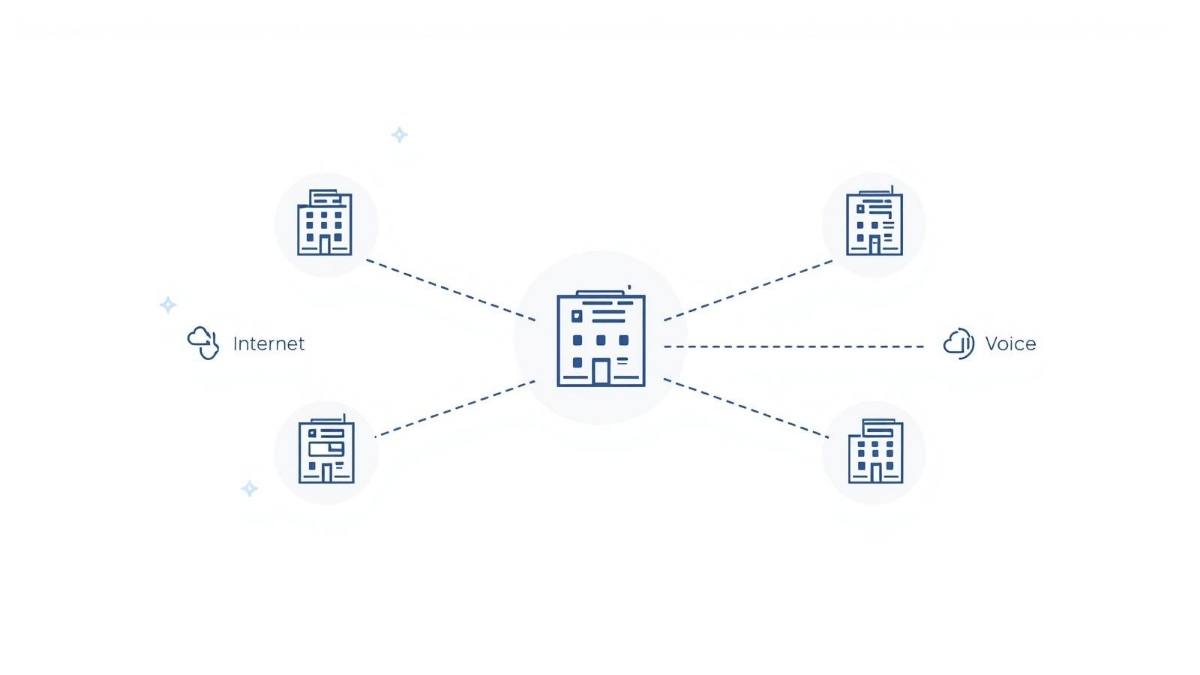
Many multi-location organizations don’t intentionally design their telecom environment—it evolves over time.
A new site opens and inherits whatever provider is available.
A legacy phone system stays in place because “it still works.”
Internet circuits are added reactively based on immediate needs.
Over time, this creates a patchwork of vendors, contracts, technologies, and support models.
From an operational standpoint, this is where problems begin.
Where the Breakdown Happens
1. No centralized ownership
Telecom decisions are often made at the site level or delegated to local staff. Without clear ownership, consistency disappears.
2. Vendor sprawl
Different carriers, different billing systems, and different escalation paths make even simple changes time-consuming.
3. Inconsistent performance
Not all locations are operating on the same level of reliability, which creates uneven user experiences and operational risk.
4. Limited visibility
Leadership often cannot answer basic questions:
- What are we paying across all locations?
- Where are our contracts?
- Which sites are at risk?
The Operational Impact
This lack of standardization doesn’t just create inconvenience—it affects the business:
- Increased downtime risk
- Slower issue resolution
- Higher total cost of ownership
- Frustration for staff and leadership
In environments like healthcare, behavioral health, and multi-site retail, these issues directly impact service delivery.
What Standardization Actually Means
Standardization is not about forcing every site into the exact same solution.
It means creating a defined framework for decision-making, including:
- Approved connectivity types (fiber, broadband, failover strategy)
- Standard voice platforms and configurations
- Defined vendors or vendor categories
- Documented escalation and support paths
A Practical Starting Point
Organizations don’t need a full overhaul to begin.
Start with three steps:
1. Inventory what exists
Document circuits, providers, contracts, and phone systems across all locations.
2. Identify inconsistencies
Look for where performance, cost, or support differs significantly.
3. Define a forward standard
Establish what “good” looks like for new locations and renewals.
From there, standardization can happen gradually—aligned with contract expirations and operational priorities.
Final Thought
Telecom environments rarely fail all at once.
They become difficult, expensive, and risky over time.
Standardization is how organizations regain control—without disrupting day-to-day operations.